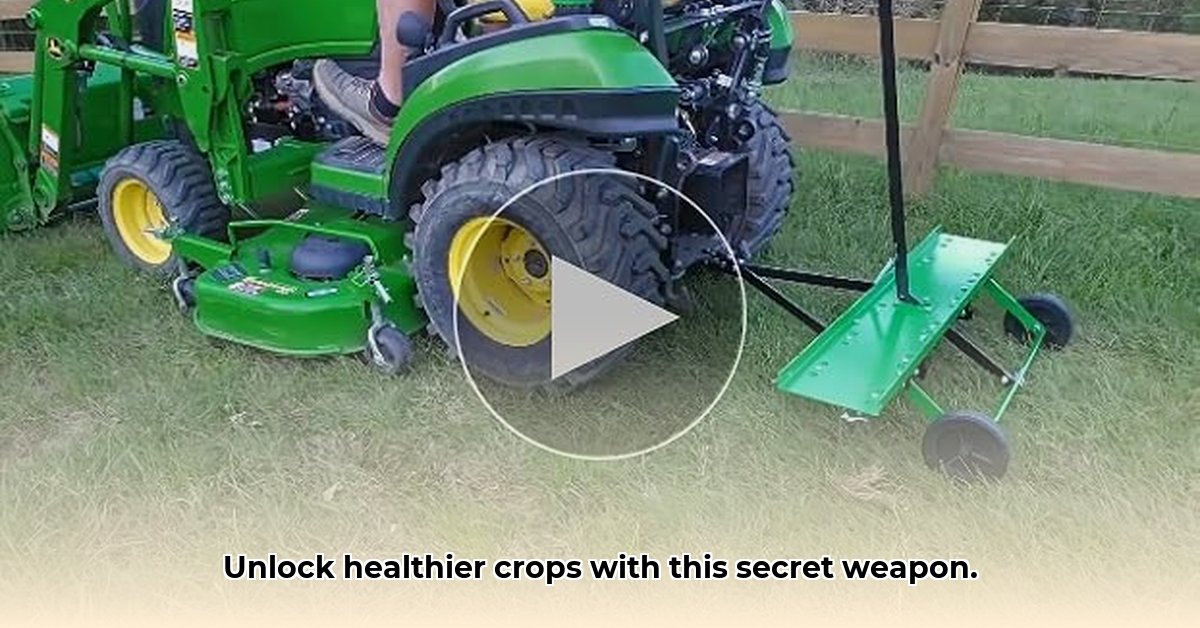
What is Dethatching and Why is it Important?
Thatch—a layer of dead grass, stems, and roots—acts like a suffocating blanket on your soil, hindering water penetration and nutrient uptake. This leads to stunted growth, reduced yields, and ultimately, a less profitable harvest. Dethatching is the process of removing this thatch layer, allowing air, water, and nutrients to reach your crops. It's a crucial step in maintaining healthy, productive soil. Think of it as giving your soil a deep breath! Aren't healthier plants worth the effort? For more on tractor-mounted equipment, check out these tractor attachments.
Choosing the Right Tractor Dethatcher: Finding Your Perfect Match
Selecting the right tractor-mounted dethatcher depends on several key factors. Finding the perfect match ensures efficiency and avoids damaging your soil or equipment.
Factors to Consider:
- Farm size: Larger farms benefit from wider dethatchers for increased efficiency. Smaller operations may find a more compact model sufficient.
- Soil type: Hard-packed or rocky soils require more robust machines with adjustable tine settings for versatility. Different soil types require different approaches to dethatching. For example, sandy soils may require a shallower setting to prevent damage.
- Budget: Dethatchers vary widely in price. Weigh the initial cost against long-term benefits like reduced labor costs and improved soil health. A higher initial investment may reduce long-term expenses.
- Tractor compatibility: Ensure the dethatcher is compatible with your tractor's three-point hitch (common categories include Cat 0 and Cat 1). Double-check power requirements (HP) to prevent overloading your tractor.
Choosing the right dethatcher is a sound investment and leads to more efficient and sustainable farming practices.
How to Use a Tractor Dethatcher: A Step-by-Step Guide
Using a tractor dethatcher is straightforward, but proper technique is crucial for optimal results and equipment longevity.
Step 1: Pre-Operation Inspection: Before attaching the dethatcher, thoroughly inspect it for any damage to tines or other components. Ensure the tine settings are appropriate for your soil type. A pre-operation inspection ensures optimal performance & longevity.
Step 2: Secure Attachment: Carefully connect the dethatcher to your tractor's three-point hitch, precisely following the manufacturer's instructions. A secure connection prevents accidents and ensures optimal functionality.
Step 3: Initial Pass: Begin at a low speed, making light passes across the field. Gradually increase speed as needed. Overlap passes slightly for complete thatch removal. Don't go too deep, especially at first. Start with a shallower setting to prevent unnecessary soil disturbance.
Step 4: Continuous Monitoring: Observe the dethatcher's performance. If clogging or uneven thatch removal occurs, stop and address the issue. Regular checks increase efficiency and prevent harm to your equipment and soil.
Maintenance and Troubleshooting: Ensuring Optimal Performance
Regular maintenance is essential for extending the lifespan of your dethatcher and ensuring its optimal performance.
- Cleaning: After each use, thoroughly clean the dethatcher to remove debris, preventing clogging and corrosion. Post-use cleaning extends equipment life and reduces maintenance costs.
- Inspection and Replacement: Regularly inspect tines for wear and tear. Replace worn or damaged tines to maintain effectiveness and protect your soil.
- Lubrication: Lubricate moving parts as recommended by the manufacturer to ensure smooth operation and prevent premature wear and tear.
Addressing problems promptly prevents more significant damage and costly repairs later. Consult your owner's manual or seek professional help if you encounter issues.
Sustainability Considerations: Farming Responsibly
Sustainable practices are paramount in modern agriculture. Using a tractor dethatcher correctly contributes to environmental stewardship.
- Avoid Over-Dethatching: Excessive dethatching can harm beneficial soil microorganisms. Moderation protects your soil's natural ecology.
- Responsible Disposal: Dispose of old parts responsibly through recycling or repurposing where possible. Environmentally conscious farming practices are essential.
- Fuel Efficiency: Operate your equipment efficiently to minimize fuel consumption and reduce your carbon footprint. Responsible fuel use reduces costs and environmental impact.
Cost-Benefit Analysis: Weighing Manual vs. Mechanized Dethatching
While a tractor-mounted dethatcher requires a higher upfront investment compared to manual dethatching, long-term benefits often outweigh the initial expense.
Manual Dethatching: Low upfront cost, high labor costs, low efficiency, potentially compromised soil health.
Mechanized Dethatching: High initial cost, low labor costs, high efficiency, significantly improved soil health.
Many farmers find the increased yield and reduced labor quickly offset the initial cost of a tractor-mounted dethatcher. The long-term return on investment often makes it a financially sound choice. Isn't optimizing your soil a worthwhile investment?
Conclusion: Reap the Rewards of Healthy Soil
Using a tractor-mounted dethatcher is a practical and sustainable way to boost crop health and yields. By following these steps and prioritizing responsible use, you'll see significant long-term improvements in soil health, reduced labor costs, and increased yields. Investing in a tractor dethatcher is an investment in a more profitable, environmentally conscious, and sustainable farm.